
2015 में Maruti की market में 50%+ हिस्सेदारी थी।
2024 में Tata Motors EV segment में leader बन गई — वो company जो 5 साल पहले losses में थी।
Auto sector में एक paradigm shift हो रहा है। और investors के लिए यह सबसे exciting — और सबसे confusing — sectors में से एक बन गया है।
Auto Sector को Understand करने का Framework
Auto sector traditional sense में cyclical sector है — economy अच्छी हो तो cars बिकती हैं, recession में sales गिरती हैं। लेकिन EV आने से यह dynamics बदल रही हैं।
🚗 Traditional Auto — पुरानी दुनिया
ICE (Internal Combustion Engine) vehicles। Margins fuel prices और commodity costs (steel, aluminium) पर depend। Maruti, Hero MotoCorp, Bajaj Auto — established players, proven business।
⚡ EV Auto — नई दुनिया
Battery, software, charging infrastructure। Tata Motors, Ola Electric, TVS (EV), Bajaj Chetak — नए dynamics। Higher upfront cost लेकिन lower running cost। Battery cost ही सबसे बड़ा game चेंजर है।
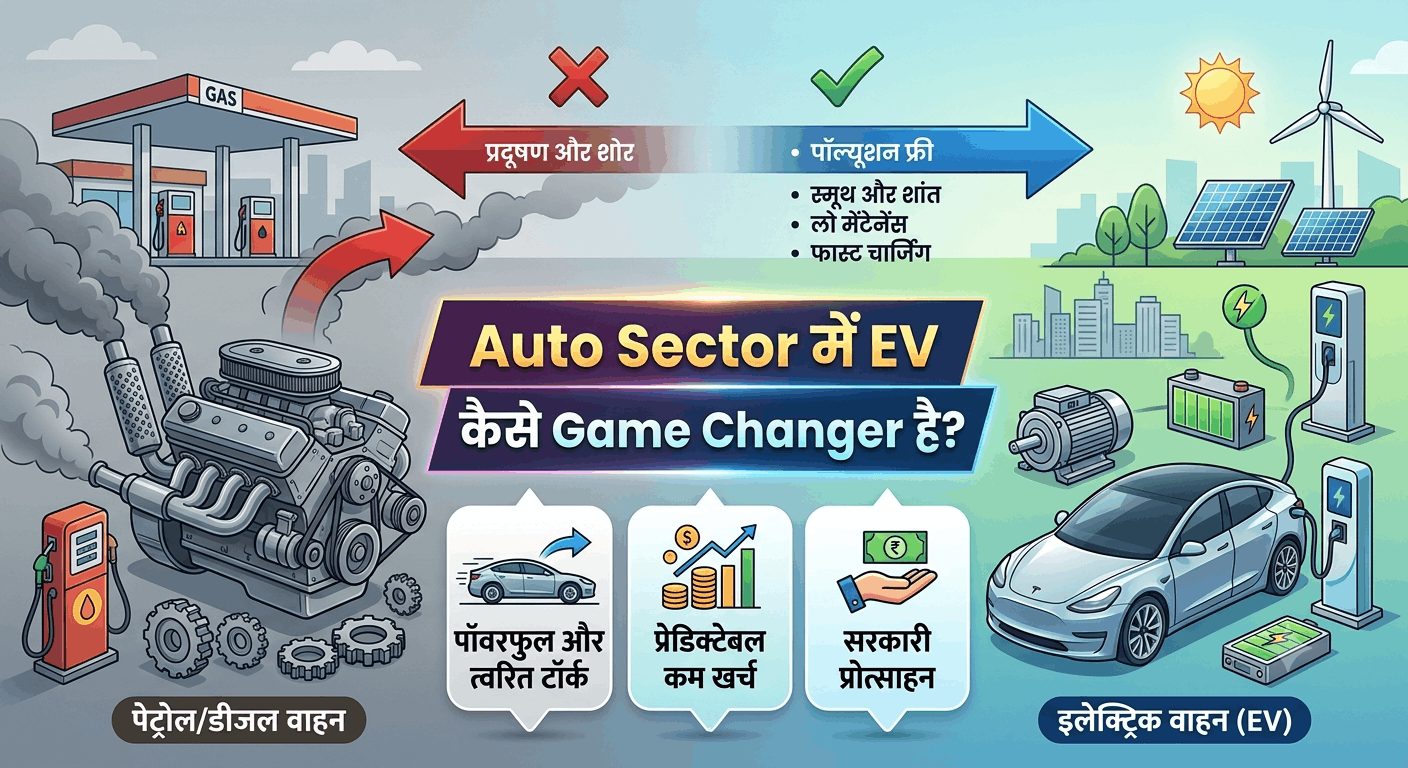
EV Game Changer क्यों है — 4 Reasons
1. Battery Cost का गिरना
2010 में एक EV Battery pack का cost था ~$1,000/kWh। 2024 में यह ~$100-120/kWh तक आ गया है — 90% से ज़्यादा गिरावट। जैसे-जैसे battery सस्ती होगी — EVs ICE vehicles से cheaper होती जाएंगी। यही inflection point है जो market को disrupt कर रहा है।
2. Total Cost of Ownership (TCO) Advantage
| Petrol Car running cost | ~₹6-8 per km (petrol @₹100/L, 15 km/L) |
| EV running cost | ~₹1-1.5 per km (home charging @₹8/unit) |
30,000 km/year → Annual savings ~₹1.5-2 लाख → TCO में EV clear winner over 5 years
3. Government Push — FAME Scheme, PLI, EV Policy
Government EV adoption actively promote कर रही है। FAME (Faster Adoption and Manufacturing of Electric Vehicles) scheme के तहत subsidies, GST reduction (28% से 5%), और PLI scheme for battery manufacturing — यह सब traditional auto को EV में shift करने के लिए incentive देते हैं।
4. EV में New Winners Emerge होते हैं
ICE में Maruti और Hero 30-40 साल से dominant हैं। EV एक नया playing field है जहाँ new companies (Tata Motors EV, Ola Electric) और even startups compete कर सकती हैं। यही investors के लिए biggest opportunity है।
Auto Stocks Evaluate करने के Key Metrics
| Metric | Traditional Auto में | EV Era में |
|---|---|---|
| Volume Growth | Total units sold (monthly) | Total + EV volume separately देखें |
| EBITDA Margin | Steel/commodity cost watch करें | EV business अभी negative margin — trajectory देखें |
| Market Share | Overall passenger/2W/CV market | EV market share separately track करें |
| R&D/Capex | Model refresh cycle | Battery technology investment, charging infra |
| Debt Level | Net debt/EBITDA | High capex phase में debt बढ़ना normal — but watch carefully |
📱 Auto Stocks Research करें
Monthly auto sales data, EV registrations — broker apps पर track करें:
Tata Motors vs Maruti — EV के बाद कौन आगे?
| Tata Motors | Maruti Suzuki | |
|---|---|---|
| EV Position | India #1 EV Maker ✅ | Late mover — EV 2025-26 से |
| ICE Strength | Strong (Nexon, Punch, Harrier) | Dominant 40%+ market share ✅ |
| Global Business | JLR (Jaguar Land Rover) — major profit driver | Primarily India-focused |
| Valuation | EV premium baked in — higher P/E | Moderate — ICE business valued |
| Risk | JLR performance, EV competition intensifying | EV transition delay → market share loss risk |
Neither/Nor approach: Tata Motors EV excitement में अगर ICE business कमज़ोर हो — valuations unsustainable हो सकती हैं। Maruti अगर EV में late आए — market share lose करेगी। दोनों में थोड़ा-थोड़ा exposure diversification के principle के तहत रखना sensible है।
EV Ancillaries — Hidden Opportunity
सिर्फ car makers नहीं — EV ecosystem में और companies भी हैं जो invest करने के लिए interesting हो सकती हैं:
🔋 Battery / BMS Companies — Amara Raja Energy, Exide Industries (Li-ion में pivot)
⚡ Charging Infrastructure — Tata Power (EV charging), Adani Green
🔌 Auto Components — Sona BLW Precision, Minda Industries — EV-specific components supply करते हैं
🏭 Copper / Aluminium — EV में 3x ज़्यादा copper होती है ICE से — Hindalco benefit कर सकती है
यह “picks and shovels” approach है — gold rush में gold ढूँढने वालों की बजाय tools बेचने वालों में invest करना। EV sector में भी यही logic काम कर सकता है।
🚀 Auto/EV Stocks — Long-term Opportunity
Monthly sales data और EV penetration rate track करते रहें
अक्सर पूछे जाने वाले सवाल
India में EV adoption कितनी तेज़ी से होगी?
India का EV penetration अभी ~5-6% (passenger vehicles) है — China और Europe 30-40% पर हैं। सरकार 2030 तक 30% EV penetration का target रखती है। 2-Wheeler EV adoption ज़्यादा fast है — Ola Electric, TVS, Bajaj के Chetak की वजह से। Charging infrastructure और battery cost दो main bottlenecks हैं जो solve होने पर adoption accelerate होगी।
Ola Electric जैसी new-age EV company में invest करना चाहिए?
Ola Electric 2023 में listed हुई — अभी profitability नहीं है, high growth पर valued है। इस तरह की “growth stocks” में investing करना high risk है — अगर revenue growth expectations meet न हों तो sharp correction आता है। Beginners के लिए Tata Motors या TVS जैसी diversified companies safer हैं — जिनका existing profitable business EV के साथ है, सिर्फ EV पर dependent नहीं।
Auto sector में invest करने का सही समय कब है?
Auto sector cyclical है — interest rates कम होने पर auto loan सस्ते होते हैं, demand बढ़ती है। Good monsoon rural auto demand बढ़ाता है। Monthly wholesale और retail sales data (SIAM और VAHAN data) देखें — consistent volume growth + improving margins = entry opportunity। Valuation (P/E) historically low हो तो और better। EV transition की वजह से अभी sector में structural change है — long-term SIP approach safer है।
📚 Sector Analysis Series

Sarita Mishra
Stock Market Educator | 10+ Years Investing Experience
Auto sector में मेरा approach “picks and shovels” है — Tata Motors के साथ Sona BLW जैसी ancillary company भी। EV transition में जो certain है वो है copper और components की demand — car maker कोई भी जीते। यही सोच रखकर portfolio बनाती हूँ।
⚠️ Disclaimer: यह post केवल educational purpose के लिए है। Auto और EV stocks में market risk है। EV penetration projections estimates हैं, guarantee नहीं। यह SEBI registered investment advice नहीं है। SEBI registered advisor से सलाह लें।
1 thought on “Auto Sector में EV कैसे Game Changer है?”