
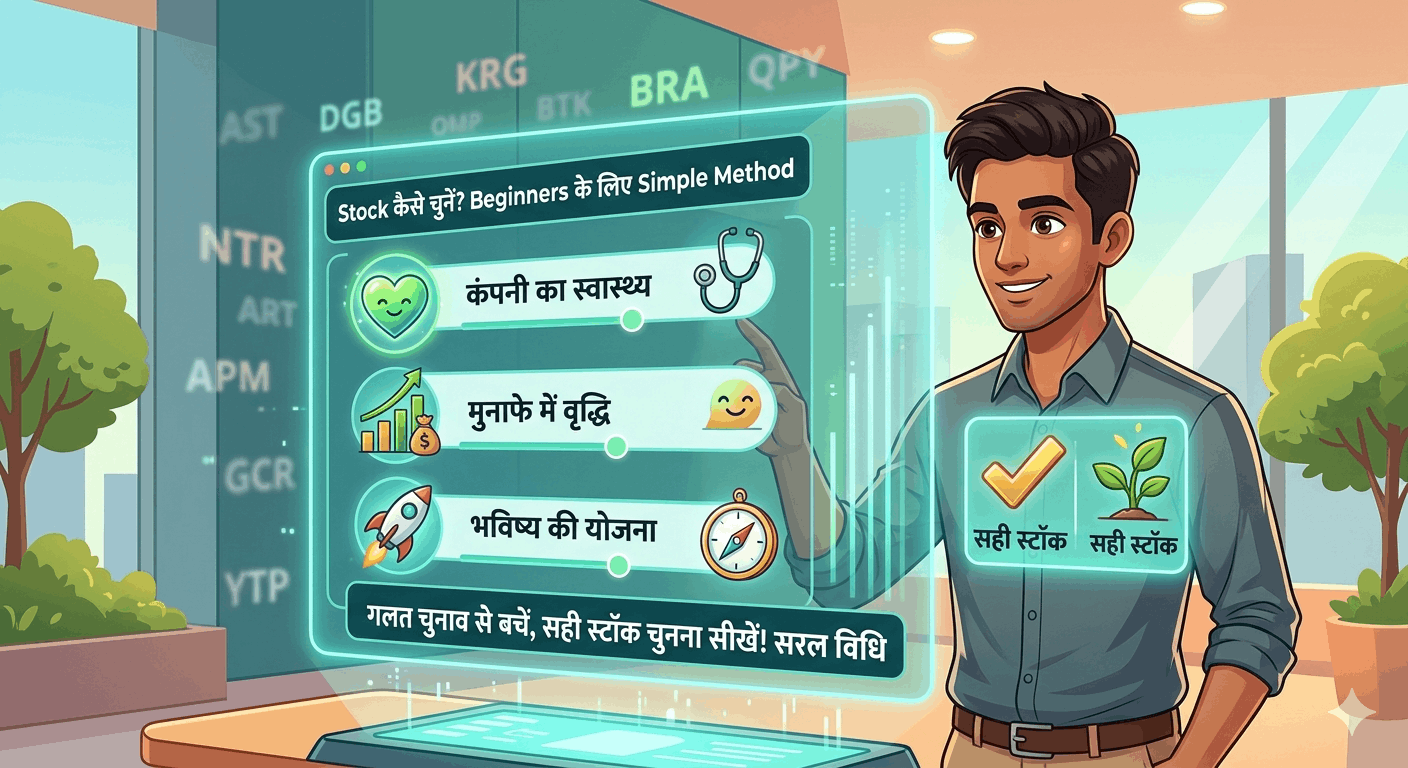
⚡ Quick Answer — Stock चुनने के 5 Steps
- Business समझें — क्या आप company को समझते हैं?
- Profitability check करें — company पैसा बना रही है?
- Debt देखें — कर्ज़ कितना है?
- Valuation check करें — stock सस्ता है या महंगा?
- Management quality — promoters trustworthy हैं?
“कौन सा stock खरीदूँ?” — यह India में सबसे ज़्यादा search होने वाला finance question है।
और honestly, यह सबसे important भी है। सही platform (Zerodha), सही process (CNC order), सही amount (₹5,000) — सब जान लिया। लेकिन कौन सी company में पैसा लगाएं — यह decision actually आपका return decide करता है।
बहुत beginners यही करते हैं:
- ❌ Friend ने बोला “XYZ ले लो” → ले लिया
- ❌ YouTube channel ने recommend किया → ले लिया
- ❌ WhatsApp group में आया → ले लिया
- ❌ News में आया → ले लिया
इनमें से कोई भी stock selection का सही तरीका नहीं है।
इस article में हम सीखेंगे वो 5-step method जो every serious investor use करता है — बिना complicated jargon के, real examples के साथ। यह method आप आज से ही apply कर सकते हैं।
अगर आपने अभी तक नहीं पढ़ा — Share क्या होता है और Long-term vs Short-term Investing पहले पढ़ें।
🧠 सबसे पहले — Mindset Shift
Stock चुनने से पहले एक important mindset shift ज़रूरी है।
जब आप stock खरीदते हैं — आप एक company के part-owner बन रहे हैं। यह lottery ticket नहीं है, price tag नहीं है — यह एक business में partnership है।
इसलिए सवाल यह नहीं है: “यह stock बढ़ेगा?”
सवाल यह होना चाहिए: “क्या यह business अगले 5-10 साल में grow करेगा?”
यह simple shift आपको short-term noise से बचाएगा और better decisions देगा।
💡 Warren Buffett का rule: “Never invest in a business you cannot understand.” — जो business आप नहीं समझते, उसमें invest मत करो।
📋 Step 1: Business को समझें — “क्या करती है यह Company?”
सबसे पहला और सबसे important step — company का business समझना।
आप किसी company में invest करने से पहले यह explain कर पाने चाहिए:
- ✅ Company क्या बेचती या service देती है?
- ✅ उसके customers कौन हैं?
- ✅ वो पैसा कैसे कमाती है?
- ✅ Competitors कौन हैं?
- ✅ 10 साल बाद भी यह business relevant होगा?
Simple Test — “6-Year-Old को Explain करें”
Warren Buffett कहते हैं — अगर आप किसी 6 साल के बच्चे को company का business explain नहीं कर सकते, तो आप खुद भी नहीं समझते।
| Company | Business (Simple) | Understandable? |
|---|---|---|
| Hindustan Unilever | Surf Excel, Dove, Rin बेचती है | ✅ बहुत easy |
| ITC | Cigarettes, Aashirvaad, Hotels | ✅ Easy |
| TCS | Global companies को IT services देती है | ✅ Understandable |
| Reliance | Jio, Retail stores, Oil refining | ✅ Mostly clear |
| Some Complex Derivative Company | Financial instruments में trading… | ❌ Skip करें |
Beginner के लिए 4 Easy-to-Understand Sectors
- 🛒 FMCG — HUL, ITC, Nestlé, Britannia (everyday products)
- 💻 IT Services — TCS, Infosys, Wipro (export-driven, stable)
- 🏦 Banking — HDFC Bank, ICICI, Kotak (interest business)
- 💊 Pharma — Sun Pharma, Dr. Reddy’s (medicine = evergreen)
💰 Step 2: Profitability Check करें — “Company पैसा बना रही है?”
एक business profitable है या नहीं — यह सबसे fundamental check है। अगर company profit नहीं बना रही, तो आप किसमें invest कर रहे हैं?
3 Key Numbers जो देखने हैं
Number 1: Revenue (Sales) Growth
Company की sales साल-दर-साल बढ़ रही हैं या नहीं?
Green flag: Revenue हर साल consistently बढ़ रहा है।
Red flag: Revenue flat है या गिर रहा है।
Example — TCS:
| Year | Revenue | Growth |
|---|---|---|
| FY 2021 | ₹1,64,177 cr | — |
| FY 2022 | ₹1,91,754 cr | +16.8% |
| FY 2023 | ₹2,25,458 cr | +17.6% |
| FY 2024 | ₹2,40,893 cr | +6.8% |
✅ Consistent growth — TCS clearly growing company है।
Number 2: Net Profit (PAT) Growth
Revenue बढ़ रहा है — लेकिन profit भी बढ़ रहा है? कभी-कभी sales बढ़ती हैं लेकिन costs और ज़्यादा बढ़ जाते हैं।
Green flag: Net profit consistently growing।
Red flag: Revenue बढ़ रही है लेकिन profit flat या गिर रहा है।
Number 3: Profit Margin
Net Profit Margin = (Net Profit ÷ Revenue) × 100
यह बताता है — ₹100 की sales पर company कितना profit बचाती है।
| Sector | Good Margin Range | Example |
|---|---|---|
| IT Services | 15-25% | TCS: ~20% |
| FMCG | 10-20% | HUL: ~15% |
| Banking | 15-25% (RoE basis) | HDFC Bank: ~20% |
| Pharma | 10-20% | Sun Pharma: ~18% |
| Auto | 5-10% | Maruti: ~8% |
यह Data कहाँ मिलेगा?
Free में इन websites पर:
- 🌐 Screener.in — India का best free fundamental data site। Company name search करो, सब data मिलेगा।
- 🌐 Tijorifinance.com — simple, visual format
- 🌐 Moneycontrol.com — popular, detailed
- 📱 Zerodha Kite — fundamentals tab में basic data
💡 Practical tip: Screener.in पर company का name search करो। “Financials” section में जाओ। Revenue, Net Profit, और Margins देखो — 5-10 साल का trend। 2 minutes में पूरी picture मिल जाती है।
🏦 Step 3: Debt Check करें — “Company पर कितना कर्ज़ है?”
High debt एक company को बर्बाद कर सकता है — भले ही business अच्छा हो। Yes Bank, DHFL, Vodafone Idea — सबकी तबाही में debt बड़ा factor था।
Debt-to-Equity Ratio (D/E Ratio)
Formula: Total Debt ÷ Total Equity
| D/E Ratio | मतलब | Flag |
|---|---|---|
| 0 – 0.5 | बहुत कम debt — excellent | ✅ Green |
| 0.5 – 1.0 | Manageable debt | ✅ Acceptable |
| 1.0 – 2.0 | Moderate debt — watch करें | ⚠️ Caution |
| 2.0+ | High debt — risky | ❌ Red Flag |
Important note: Banking sector के लिए यह rule अलग है — banks का business ही debt पर based है (deposits = liabilities)। Banks के लिए NPA ratio और Capital Adequacy Ratio देखें।
Interest Coverage Ratio
Formula: EBIT ÷ Interest Expense
यह बताता है — company अपने interest payments कितनी easily cover कर सकती है।
- 3x से ज़्यादा: ✅ Comfortable
- 1.5x – 3x: ⚠️ Watch करें
- 1x से कम: ❌ Danger — profit से interest भी नहीं निकल रहा
Debt-free Companies — Beginner’s Safe Zone
शुरुआत के लिए zero या very low debt companies को prefer करें:
- ✅ TCS — Practically debt-free, cash-rich
- ✅ Infosys — No debt
- ✅ HUL — Minimal debt
- ✅ Bajaj Finance — NBFC so some debt, but well-managed
- ✅ Asian Paints — Very low debt
📊 Step 4: Valuation Check करें — “Stock सस्ता है या महंगा?”
एक अच्छी company का stock भी गलत price पर खरीदना loss दे सकता है। Valuation यही बताती है — stock currently fair price पर है, undervalued है, या overvalued।
P/E Ratio — सबसे Important Valuation Tool
P/E Ratio (Price-to-Earnings) = Stock Price ÷ Earnings Per Share (EPS)
यह बताता है — investors इस company की ₹1 की earning के लिए कितना pay कर रहे हैं।
| P/E Range | मतलब | Interpretation |
|---|---|---|
| Below 15 | Possibly undervalued | ✅ Cheap — investigate why |
| 15 – 25 | Fair value range | ✅ Reasonable for large-cap |
| 25 – 40 | Growth premium | ⚠️ Okay if growth justifies it |
| 40+ | Expensive / high expectation | ⚠️ Be careful |
| Negative P/E | Company loss में है | ❌ Avoid (mostly) |
Important: P/E को industry average से compare करें — हर sector का normal P/E range अलग होता है।
| Sector | Typical P/E Range (India) |
|---|---|
| FMCG | 40-60x (premium sector) |
| IT Services | 20-30x |
| Banking | 10-20x |
| Pharma | 25-40x |
| Auto | 15-25x |
| Infrastructure | 15-30x |
PEG Ratio — Growth के साथ Valuation
P/E अकेला misleading हो सकता है — अगर company fast grow कर रही है तो high P/E justify होता है। PEG (Price/Earnings to Growth) इसे adjust करता है।
PEG = P/E ÷ Earnings Growth Rate
- PEG < 1: ✅ Undervalued relative to growth
- PEG = 1: ✅ Fairly valued
- PEG > 2: ⚠️ Possibly overvalued
P/B Ratio — Asset-heavy Companies के लिए
Banks और capital-heavy companies के लिए P/B (Price-to-Book) better metric है।
P/B = Stock Price ÷ Book Value per Share
- P/B < 1: Stock book value से कम — potentially cheap
- P/B 1-3: Normal range for most sectors
- P/B 3+: Premium — only justified for high-RoE companies
👨💼 Step 5: Management Quality — “Promoters Trustworthy हैं?”
यह step most beginners skip कर देते हैं — और यही सबसे costly mistake है। एक अच्छी company bad management की वजह से destroy हो सकती है।
Promoter Holding Check करें
Promoter holding = founders/owners के पास कितने % shares हैं।
| Promoter Holding | Signal |
|---|---|
| 50%+ | ✅ Strong conviction — “skin in the game” |
| 30-50% | ✅ Acceptable |
| Below 20% | ⚠️ Why is promoter selling? Investigate |
| Promoter holding continuously decreasing | ❌ Red Flag — insiders exiting |
5 Management Quality Checks
Check 1: Promoter Pledging
अगर promoters ने अपने shares को loan के लिए pledge किया है — यह bad sign है। High pledging = financial stress। Screener.in पर यह data मिलता है।
Check 2: Past Track Record
Management ने past में जो guidance दी — क्या वो achieve किया? Annual reports पढ़ें। पिछले 3-5 साल की management commentary देखें।
Check 3: Capital Allocation
Company अपना profit कैसे use कर रही है? Dividend देती है? Business में reinvest करती है? या unnecessary acquisitions करती है? अच्छी management capital wisely use करती है।
Check 4: Related Party Transactions
Annual report में related party transactions देखें — promoters खुद की companies को ज़्यादा deal दे रहे हैं? यह minority shareholders के interest के against है।
Check 5: Management Remuneration
CEO और top management की salary company profit के proportion में reasonable है? अगर company loss में है लेकिन management करोड़ों ले रही है — red flag।
Trusted Management — Examples
- ✅ Bajaj Group — Rajiv Bajaj, consistent capital allocation
- ✅ TCS/Tata Group — N. Chandrasekaran, decades of trust
- ✅ Kotak Mahindra Bank — Uday Kotak, long-term vision
- ✅ Asian Paints — conservative management, consistent returns
🔍 Bonus Step: Competitive Advantage (Moat) देखें
यह Warren Buffett का favorite concept है — “Economic Moat” यानी company की वो special ability जो competitors को दूर रखती है।
4 Types of Moat
| Moat Type | क्या है | India Example |
|---|---|---|
| Brand Moat | ऐसा brand जिसे customers पहचानते हैं और trust करते हैं | HUL (Surf Excel), Asian Paints |
| Network Effect | ज़्यादा users = ज़्यादा valuable product | NSE, Zerodha, Zomato |
| Cost Advantage | Competitors से सस्ता produce कर सकती है | Reliance (scale advantage) |
| Switching Cost | Customers आसानी से competitor नहीं जा सकते | TCS (long-term IT contracts) |
Simple test: “अगर कोई नई company ₹1,000 crore लगाए — क्या वो इस company को replace कर सकती है?” अगर answer “नहीं” है — moat strong है।
🛠️ Free Research Tools — कहाँ से Data मिलेगा?
अच्छी बात यह है कि India में excellent free research tools हैं। Paid subscription की ज़रूरत नहीं:
| Tool | Website | Best For |
|---|---|---|
| Screener.in | screener.in | Financial data, ratios, 10-yr trends — best overall |
| Tijorifinance | tijorifinance.com | Visual charts, peer comparison |
| Moneycontrol | moneycontrol.com | News, financials, shareholding pattern |
| NSE India | nseindia.com | Official data, annual reports, price history |
| Zerodha Kite | kite.zerodha.com | Charts + basic fundamentals in one place |
| BSE India | bseindia.com | Annual reports, quarterly results filing |
Screener.in पर 5-Minute Research कैसे करें
- screener.in खोलें → company name search करें
- “Financials” tab → Revenue, Net Profit, Margins — 10 साल trend देखें
- “Ratios” tab → P/E, D/E, RoE, RoCE check करें
- “Shareholding” tab → Promoter holding और pledging देखें
- “Peers” tab → Same sector की companies से compare करें
यह 5 minutes में आपको एक company की complete picture दे देगा।
✅ Complete Stock Selection Checklist
यह checklist print करें या screenshot लें — हर stock research के लिए use करें:
| Category | Question | Check |
|---|---|---|
| Business | क्या मैं company का business clearly explain कर सकता हूँ? | ⬜ |
| क्या product/service की demand 10 साल में भी रहेगी? | ⬜ | |
| क्या company का कोई competitive advantage (moat) है? | ⬜ | |
| Profitability | क्या Revenue पिछले 5 साल में consistently बढ़ी है? | ⬜ |
| क्या Net Profit growing trend में है? | ⬜ | |
| क्या Profit Margin sector average के करीब या ऊपर है? | ⬜ | |
| Debt | क्या D/E Ratio 1.0 से कम है? | ⬜ |
| क्या Interest Coverage Ratio 3x से ज़्यादा है? | ⬜ | |
| Valuation | क्या P/E industry average के करीब या कम है? | ⬜ |
| क्या current price growth के relative fair/undervalued है? | ⬜ | |
| Management | क्या Promoter holding 40%+ है और stable/increasing है? | ⬜ |
| क्या Promoter pledging कम या zero है? | ⬜ | |
| क्या management ने past guidance achieve की है? | ⬜ |
10 में से 8+ boxes check हों → strong buy candidate। 6-7 → research करें, watch करें। 5 या कम → avoid करें।
📌 Real Example — TCS को इस Method से Analyze करें
चलिए theory नहीं — TCS पर यह 5-step method live apply करते हैं:
Step 1: Business समझें
TCS (Tata Consultancy Services) — global companies को IT services और consulting देती है। Simple, understandable। ✅
Step 2: Profitability
- Revenue FY24: ₹2,40,893 cr — consistently growing ✅
- Net Profit FY24: ₹46,099 cr — strong ✅
- Net Profit Margin: ~19% — excellent for IT ✅
- RoE: ~50%+ — exceptional ✅
Step 3: Debt
- D/E Ratio: ~0 (practically debt-free) ✅
- Net cash company — positive cash balance ✅
Step 4: Valuation
- P/E: ~25-30x — premium लेकिन IT sector average में ✅
- Consistent dividend — shareholder-friendly ✅
Step 5: Management
- Tata Group — India का most trusted conglomerate ✅
- Promoter holding: ~72% — very high confidence ✅
- Zero pledging ✅
- Consistent guidance achievement ✅
TCS Score: 12/13 checks ✅ — यही reason है कि यह India के most consistent wealth-creating stocks में से एक है।
❌ 6 Common Mistakes — Stock Choosing में
Mistake 1: Tips पर Blind Trust
WhatsApp/YouTube tips 90% cases में wrong होती हैं। Tip देने वाला या तो already invested है (आपको buyer बना रहा है) या genuinely नहीं जानता। हमेशा खुद research करें — यह 5-step method use करें।
Mistake 2: सिर्फ Price देखना
“₹10 का stock सस्ता है, ₹4,000 का TCS महंगा” — यह completely wrong thinking है। Stock price absolute number नहीं होती — valuation (P/E, P/B) देखें। ₹4,000 का TCS ₹10 के penny stock से कहीं ज़्यादा “सस्ता” हो सकता है।
Mistake 3: एक Quarter के Results पर Decide करना
एक bad quarter = sell नहीं। एक good quarter = तुरंत buy नहीं। कम से कम 5 साल का trend देखें।
Mistake 4: Sector Trend को Company Success मानना
IT sector boom में सब IT stocks नहीं बढ़ते। हर company की individual merit देखें।
Mistake 5: High Dividend = Good Investment
High dividend sometimes sign होता है कि company growth opportunities नहीं देख रही और profit बाँट रही है। Dividend + growth combination देखें।
Mistake 6: News पर React करना
“आज Infosys की quarterly results अच्छी आई → तुरंत खरीदो” — market पहले ही इसे price में factor कर चुका होता है। News पर react करना usually late entry होती है।
❓ FAQs — Stock Selection के बारे में
Q1: कितने Stocks Portfolio में रखें?
Beginners के लिए: 5-10 stocks maximum। ज़्यादा stocks = ज़्यादा research burden + over-diversification (returns dilute होते हैं)। Warren Buffett और Peter Lynch जैसे investors concentrated portfolios रखते थे। Start with 5 quality stocks, then expand as you learn. Each stock should represent a conscious choice, not a tip.
Q2: Small-cap और Mid-cap में invest करें?
Beginners के लिए: पहले 1-2 साल सिर्फ large-cap। Large-cap stocks में data available होता है, liquidity अच्छी होती है, और risk कम होता है। Mid-cap तब add करें जब fundamental analysis comfortable हो जाए। Small-cap — 3+ साल के experience के बाद। Higher reward = higher risk और research burden।
Q3: क्या सिर्फ P/E से stock choose करना safe है?
नहीं — P/E alone insufficient है। Low P/E stock “value trap” हो सकता है — company declining है इसलिए सस्ती दिखती है। High P/E stock “growth stock” हो सकता है — premium justified है। Always use P/E + Revenue growth + Debt + Management — सब together। यही इस article का 5-step method है।
Q4: किसी stock का Annual Report कहाँ मिलेगा?
BSE India (bseindia.com) पर हर listed company का annual report free में available है। NSE India (nseindia.com) पर भी। Company की official investor relations page पर भी। Annual report पढ़ना initially boring लगता है — लेकिन Management Discussion & Analysis section और Chairman’s Letter सबसे valuable होते हैं। इन्हें ज़रूर पढ़ें।
Q5: क्या हर साल नए stocks add करते रहें?
Mindlessly नहीं। Rule: हर नया stock add करने के लिए उतनी ही quality research होनी चाहिए जितनी पहले stock के लिए। “मैं इस stock का business, financials, debt, valuation, और management समझता हूँ” — यह confident feel होना चाहिए। अगर नहीं, तो Index Fund में invest करना बेहतर है।
🎯 Summary — आज से Apply करें
Stock choosing complicated नहीं है — बस systematic होना चाहिए। यह 5-step method याद रखें:
| # | Step | Key Question | Tool |
|---|---|---|---|
| 1 | Business समझें | क्या 6-year-old को explain कर सकते हो? | Common sense |
| 2 | Profitability | Revenue + Profit growing हैं? | Screener.in |
| 3 | Debt | D/E Ratio 1 से कम है? | Screener.in |
| 4 | Valuation | P/E industry average में है? | Screener.in / Kite |
| 5 | Management | Promoter holding 40%+ और stable? | Screener.in |
आज का action:
- Screener.in खोलें
- TCS search करें → 5-step method apply करें (practice के लिए)
- फिर ITC और HDFC Bank पर try करें
- Compare करें — कौन सा आपको most confident feel कराता है?
- वही खरीदें।
🎯 Final thought: अगर research करने के बाद भी confused हों — NIFTYBEES (Nifty 50 ETF) खरीदें। एक ETF = 50 best companies। Zero research needed। यह हमेशा valid option है।
🚀 Research की, अब खरीदें
Zerodha — India का best platform। ₹0 delivery brokerage + Screener data integrated।
⚠️ Affiliate link — zero cost to you.
📧 Weekly Stock Research Tips — Hindi में Free
Stock analysis tips, IPO reviews, market updates — हर Sunday। 5,000+ investors subscribed।
Free Subscribe करें →📚 Related Posts — आगे क्या पढ़ें
- 👉 Post #2: Share क्या होता है?
- 👉 Post #17: Long-term vs Short-term Investing
- 👉 Post #19: Fundamental Analysis क्या है?
- 👉 Post #22: Risk Management Complete Guide
- 👉 Post #15: पहली बार Share कैसे खरीदें?
- 👉 Post #30: Stock Market Glossary — 50 ज़रूरी Terms

👤 Sarita Mishra
10+ साल का stock market investing experience। Founder of Stock Market Pro. Hindi में finance education के माध्यम से beginners को सही investment decisions लेने में मदद करना मेरा mission है।
📅 Published: [Date] · 🔄 Last Updated: [Date] · ⏱️ Reading time: 11 minutes
2 thoughts on “Stock कैसे चुनें? Beginners के लिए Simple Method 2026”