
→ हमारी Full Disclaimer पढ़ें
⚡ Quick Answer
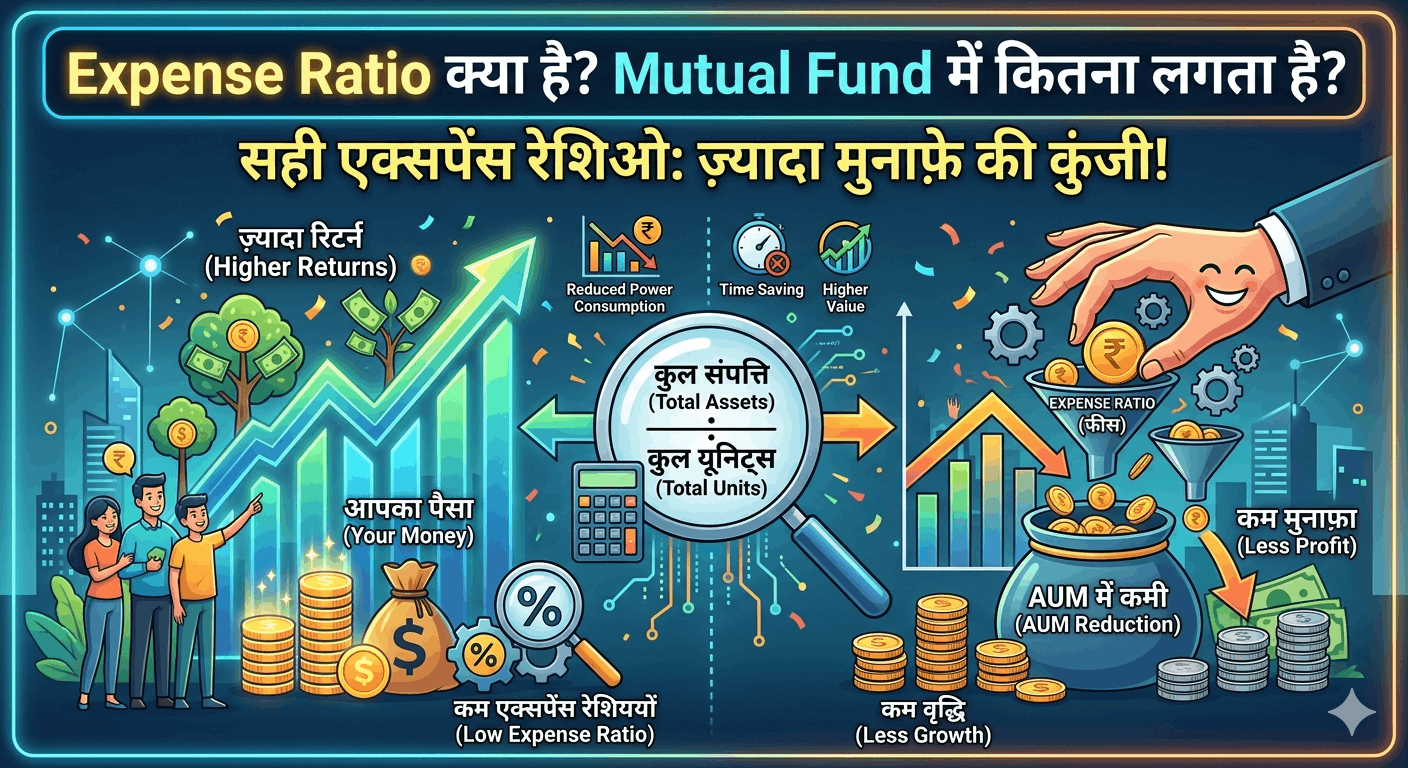
Expense Ratio वो annual fees है जो Mutual Fund आपके investment से manage करने के लिए charge करता है। यह automatically NAV से कटती है — आपको अलग से pay नहीं करना। कम Expense Ratio = आपको ज़्यादा return। Index Funds में सबसे कम (0.10–0.20%), actively managed funds में ज़्यादा (0.5–2%)।
Mutual Fund choose करते वक्त लोग सिर्फ returns देखते हैं।
लेकिन एक number और है जो returns को silently कम करता रहता है — Expense Ratio।
यह 0.1% से 2.5% तक होता है। छोटा लगता है — लेकिन 20 साल में यह लाखों का फर्क डाल सकता है।
इस post में Expense Ratio को बिल्कुल simple भाषा में समझाऊँगी।
Expense Ratio क्या होता है?
जब आप Mutual Fund में invest करते हैं, तो उसे manage करने के लिए खर्च होते हैं:
- Fund Manager की salary — जो stocks research और select करता है
- Administrative cost — office, staff, operations
- Marketing expenses — advertisements, distribution
- Custodian fees — securities safe रखने का खर्च
- Registrar fees — investor records manage करना
यह सब खर्च मिलाकर एक % में express होते हैं — यही Expense Ratio है।
FORMULA
Expense Ratio = Total Annual Expenses ÷ Average AUM × 100
इसे TER (Total Expense Ratio) भी कहते हैं।
Expense Ratio काम कैसे करता है? — Example
📊 Real Example — ₹1 लाख investment
Fund A
Expense Ratio: 0.20%
₹200/year कटेगा
Fund B
Expense Ratio: 1.50%
₹1,500/year कटेगा
₹1,300/year का फर्क — बिना आपको पता चले।
Important: Expense Ratio daily basis पर NAV से automatically deduct होती है। आपको अलग से कुछ pay नहीं करना — लेकिन आपकी returns उतनी कम हो जाती हैं।
Example: Fund ने 12% gross return दिया, Expense Ratio 1% है → आपको मिलेगा 11% net return। NAV में पहले से expense deduct हो चुकी होती है।
SEBI की Expense Ratio Limits
SEBI ने maximum Expense Ratio की limit तय की है — AMC मनमाना charge नहीं कर सकती।
| Fund AUM | Maximum TER (Equity) | Maximum TER (Debt) |
|---|---|---|
| पहले ₹500 crore | 2.25% | 2.00% |
| ₹500–₹750 crore | 2.00% | 1.75% |
| ₹750 crore+ | 1.75% | 1.50% |
| Index / ETF Funds | Max 1.00% | — |
Real world में top Index Funds 0.10–0.20% charge करते हैं — SEBI limit से कहीं कम।
Direct vs Regular Plan में Expense Ratio का फर्क
Regular Plan में distributor commission जाता है — इसलिए expense ratio ज़्यादा होती है। Same fund में:
| Fund | Direct Plan | Regular Plan | फर्क |
|---|---|---|---|
| UTI Nifty 50 | 0.18% | 0.50% | 0.32% |
| Parag Parikh Flexi Cap | 0.53% | 1.32% | 0.79% |
| HDFC Mid Cap | 0.78% | 1.72% | 0.94% |
20 साल में Expense Ratio का असर — ₹5,000/month SIP
₹9.2 लाख कम — सिर्फ Expense Ratio के कारण
📱 Low Expense Ratio वाले Direct Plans यहाँ मिलते हैं
Groww, Zerodha, Angel One — सभी पर Direct Plans free में available:
Expense Ratio कितना होना चाहिए?
| Fund Type | Excellent | Acceptable | Avoid |
|---|---|---|---|
| Index Fund | 0.10–0.20% | 0.20–0.50% | 0.50%+ |
| Large Cap Active | 0.50–0.80% | 0.80–1.20% | 1.50%+ |
| Flexi/Mid Cap | 0.60–1.00% | 1.00–1.50% | 1.80%+ |
| Liquid/Debt | 0.10–0.25% | 0.25–0.50% | 0.75%+ |
Rule of Thumb: Actively managed fund का expense ratio उसके extra return (alpha) से justify होना चाहिए। अगर fund benchmark से ज़्यादा return नहीं देता — तो high expense ratio का कोई मतलब नहीं।
Expense Ratio को लेकर 3 Common गलतियाँ
❌ गलती 1: Expense Ratio को ignore करना
“सिर्फ 0.5–1% है — क्या फर्क पड़ता है।” 20 साल में ₹9+ लाख का फर्क पड़ता है। हर fund select करते वक्त expense ratio check करें।
❌ गलती 2: Bank या Agent से Regular Plan लेना
Bank अक्सर Regular Plan देता है जिसमें 0.5–1% extra commission होता है। हमेशा Direct Plan लें। Groww, Zerodha पर आसानी से available है।
❌ गलती 3: सिर्फ Expense Ratio देखकर Fund चुनना
0.10% expense ratio वाला fund automatically best नहीं है। Index Fund के लिए low expense ज़रूरी है — लेकिन Active Fund में consistent returns और fund manager quality भी देखें।
📊 Expense Ratio Calculator — आपके SIP पर कितना असर?
यह table देखें — same SIP amount, same return, सिर्फ Expense Ratio का फर्क।
Assumption: 12% Gross Return। Net Return = Gross − Expense Ratio।
| Monthly SIP | 0.20% Expense (Index Fund) |
1.00% Expense (Active Fund) |
2.00% Expense (Regular Plan) |
Saving (0.20% vs 2%) |
|---|---|---|---|---|
| ⏱ 10 साल | ||||
| ₹1,000 | ₹2.32L | ₹2.21L | ₹2.08L | +₹24K |
| ₹5,000 | ₹11.6L | ₹11.0L | ₹10.4L | +₹1.2L |
| ₹10,000 | ₹23.2L | ₹22.1L | ₹20.8L | +₹2.4L |
| ⏱ 20 साल | ||||
| ₹1,000 | ₹9.9L | ₹8.9L | ₹7.9L | +₹2.0L |
| ₹5,000 | ₹49.4L | ₹44.6L | ₹39.8L | +₹9.6L |
| ₹10,000 | ₹98.9L | ₹89.2L | ₹79.6L | +₹19.3L |
| ⏱ 30 साल | ||||
| ₹1,000 | ₹34.9L | ₹29.5L | ₹24.6L | +₹10.3L |
| ₹5,000 | ₹1.74Cr | ₹1.47Cr | ₹1.23Cr | +₹51L |
| ₹10,000 | ₹3.49Cr | ₹2.95Cr | ₹2.46Cr | +₹1.03Cr |
💡 Key Takeaway: ₹10,000/month SIP, 30 साल — 0.20% expense ratio पर ₹3.49 करोड़ vs 2% expense पर ₹2.46 करोड़। ₹1.03 करोड़ का फर्क!
*Illustrative figures। 12% gross return assume करके। Actual returns vary करते हैं।
🏆 Top 10 Lowest Expense Ratio Funds 2026 — Direct Plan
यह India के वो funds हैं जहाँ आपका सबसे कम पैसा fees में जाता है:
| # | Fund Name | Category | Expense Ratio | Min SIP |
|---|---|---|---|---|
| 1 | UTI Nifty 50 Index Fund | Index | 0.18% | ₹500 |
| 2 | HDFC Index Fund — Nifty 50 | Index | 0.20% | ₹100 |
| 3 | Nippon India Index Fund — Nifty 50 | Index | 0.20% | ₹100 |
| 4 | SBI Nifty 50 Index Fund | Index | 0.20% | ₹500 |
| 5 | Mirae Asset ELSS Tax Saver | ELSS | 0.51% | ₹500 |
| 6 | Parag Parikh Flexi Cap Fund | Flexi Cap | 0.53% | ₹1,000 |
| 7 | Canara Robeco Bluechip Equity | Large Cap | 0.56% | ₹1,000 |
| 8 | HDFC Balanced Advantage Fund | Hybrid BAF | 0.68% | ₹100 |
| 9 | HDFC Flexi Cap Fund | Flexi Cap | 0.75% | ₹100 |
| 10 | SBI Liquid Fund | Liquid | 0.20% | ₹1,000 |
*Expense ratio figures indicative हैं — invest करने से पहले AMC/AMFI website पर verify करें।
⚖️ Expense Ratio vs Exit Load vs STT — तीनों Charges एक जगह
Mutual Fund में सिर्फ Expense Ratio नहीं — और भी charges होते हैं। तीनों को समझें:
| Charge | क्या है? | कब लगता है? | कितना? | Avoid कैसे करें? |
|---|---|---|---|---|
| Expense Ratio | Fund management की annual fees | हर दिन — NAV से | 0.10–2.25% | Direct Plan + Index Fund |
| Exit Load | जल्दी निकालने की penalty | Early redemption पर | 0.5–2% (one-time) |
Lock-in period पूरा करें |
| STT | Securities Transaction Tax | Equity Fund redeem करने पर | 0.001% | Avoid नहीं — बहुत कम है |
| Capital Gains Tax | Profit पर government को tax | Redeem करने पर profit हो तो | 20% (STCG) 12.5% (LTCG) |
1+ साल hold करें (LTCG) |
📌 Real Example — ₹1 लाख invest, 1 साल में ₹1.15 लाख हुआ
Gross Profit: ₹15,000
Expense Ratio (1% annual): −₹1,075 (already NAV में deduct)
Exit Load (1% — 1 साल से पहले निकाला): −₹1,150
STCG Tax (20% on ₹15K): −₹3,000
Net Profit: ~₹9,775 (₹15,000 से ₹5,225 कम)
Lesson: 1+ साल hold करें → Exit Load नहीं, LTCG tax कम। Direct Plan में → Expense Ratio कम। सब मिलाकर returns significantly बेहतर होते हैं।
🔍 Expense Ratio कैसे Check करें? — Step by Step
3 platforms पर — बिल्कुल आसान:
⚡ Quick Tip
Fund choose करते वक्त हमेशा “Direct Plan” filter लगाएं — Regular Plan automatically छन जाएगा। फिर expense ratio देखें — 1% से कम हो तो acceptable है।
🚀 Low Cost Direct Plan में Invest करें
Expense Ratio कम = Return ज़्यादा — आज से शुरू करें
अक्सर पूछे जाने वाले सवाल (FAQ)
क्या Expense Ratio अलग से pay करना होता है?
नहीं। Expense Ratio daily basis पर fund की NAV से automatically deduct होती है। आपको अलग से कोई payment नहीं करनी। जो NAV आप देखते हैं वो already expense deduct होने के बाद की होती है। इसीलिए इसे notice नहीं किया जाता — लेकिन long-term में इसका बड़ा impact होता है।
Expense Ratio और Exit Load में क्या फर्क है?
Expense Ratio annual recurring charge है जो हर दिन NAV से कटती है। Exit Load एक one-time penalty है जो तभी लगती है जब आप fund से जल्दी पैसे निकालते हैं — जैसे 1 साल से पहले। Expense Ratio हमेशा लगती है, Exit Load केवल early redemption पर।
क्या Expense Ratio बदलती रहती है?
हाँ। AMC हर साल expense ratio revise कर सकती है — SEBI की limits के अंदर। जब fund का AUM बढ़ता है तो expense ratio आमतौर पर कम होती है। Invest करने से पहले current expense ratio check करें — Groww, ValueResearch, या AMC website पर मिलती है।
Index Fund में Expense Ratio इतनी कम क्यों होती है?
Index Fund passively managed होता है — fund manager को stock research नहीं करनी, बस Nifty 50 को copy करना है। इसलिए research cost, analyst salary जैसे expenses नहीं होते। UTI Nifty 50 Index Fund का expense ratio 0.18% है जबकि actively managed Large Cap fund 0.8–1.5% charge करता है।
📚 और पढ़ें — Mutual Fund Series

Sarita Mishra
Stock Market Educator | 10+ Years Investing Experience
Expense Ratio वो “silent killer” है जो आपकी wealth को धीरे-धीरे कम करती है। मैंने हमेशा Direct Plan चुना और low expense ratio को priority दी — यह एक habit है जो long-term में बहुत फायदा देती है।
⚠️ Disclaimer: यह post केवल educational purpose के लिए है। Mutual Fund investments market risk के अधीन हैं। Expense ratio figures indicative हैं — invest करने से पहले AMC website या SEBI AMFI पर current rates verify करें। इसमें दी गई कोई भी जानकारी SEBI registered investment advice नहीं है।